
Digging into the Past: Exploring Whitney Manor’s Toledo History
Posted on September 16, 2026
by Gayle H
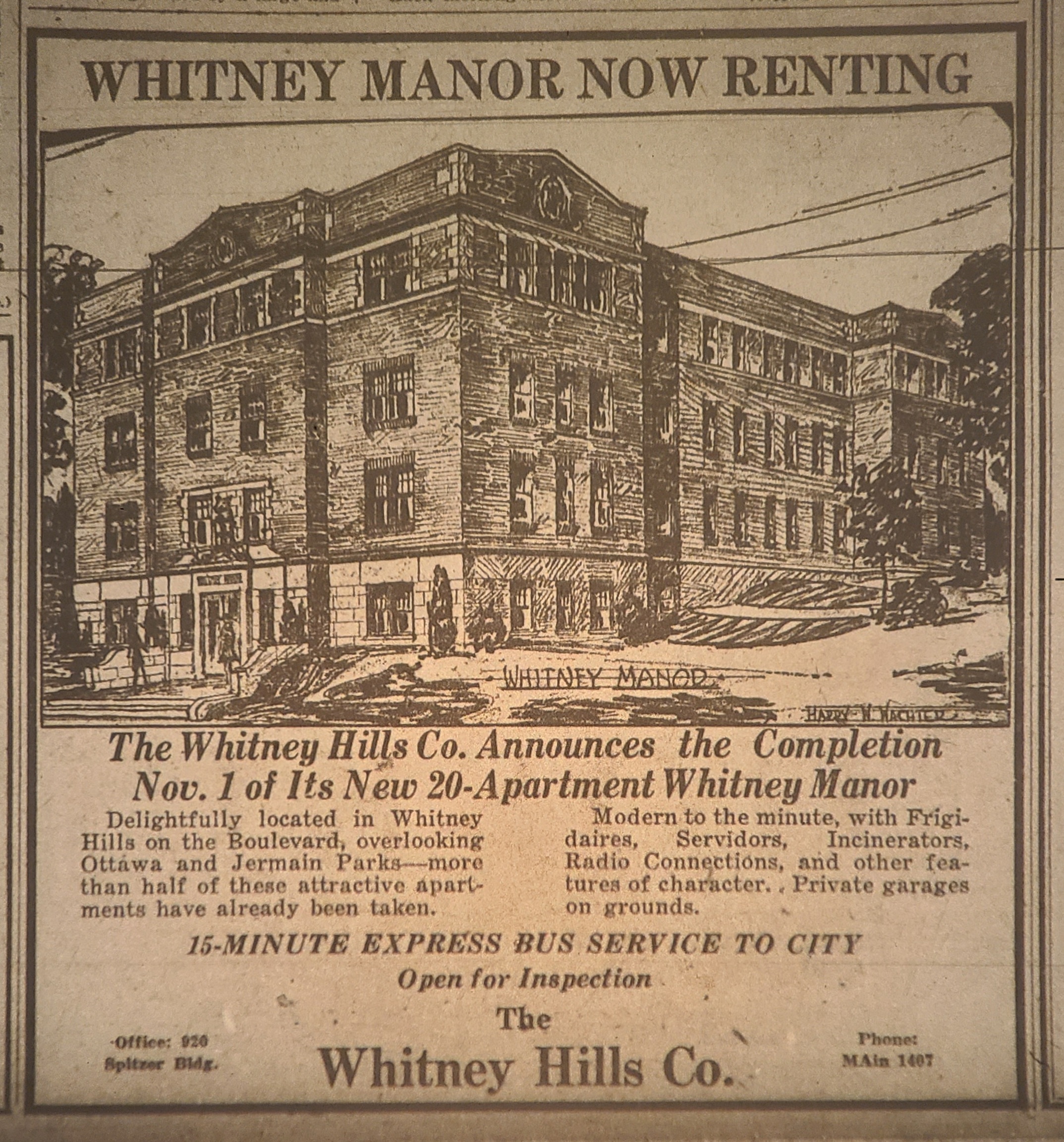
An image from The Blade celebrating the opening of the manor
Thanks to the partnership between Unison Health and the City of Toledo, Whitney Manor will soon be used to help people experiencing homelessness and living with mental health conditions. Its new purpose is not only to provide housing, but also to assist individuals on a journey to independence by providing behavioral health services, life skill programs, and workforce readiness training.
Like many patrons coming through the proverbial doors of Local History & Genealogy (LH&G), a representative from Unison Health recently reached out to us to find out what she could about the historic building. Follow along with to find out what we uncovered about this historic building and learn how you can do the same.
We kicked off our search by checking the Lucas County Auditor’s website, AREIS (Auditor’s Real Estate Information System). This is where we discovered that manor had been built in 1925. Using historic images from the Library’s online Auditor’s Collection, we uncovered a photograph of Whitney Manor which was one of the earlier photographs taken by the Lucas County Auditor’s Office through a Works Progress Administration project in 1937. The paperwork included in the file not only confirmed the building’s construction date, but it also showed us tell-tale image of the photographer’s assistant holding the accessor’s number associated with the property.
Next we checked the Sanborn Fire Insurance Maps (below, left image) which are large-scale street plans of U.S. cities and towns created during the 19th and 20th centuries to help fire insurance companies assess property risks and potential financial losses. While these maps are sure to grab the attention of to anyone walking through LH&G in person, their unwieldly size can make them difficult to peruse. Luckily, the Library offers online access to Sanborn Insurance Maps and accessing them in color is possible through the Library of Congress and Kent State University’s websites.
Another important resource in this research was our online collection of The Blade. After a brief introduction to searching the database, our customer found several great articles and images (below, center-left image) that she can print and frame to help highlight the history of Whitney Manor to visitors and residents. Librarians were also able to find better versions of two smaller images she wanted by using the Library’s microfilmed collection. For a full-page feature celebrating the 1927 opening of the facility in 1927, we turned to our bound collection of The Blade, housed in our basement. Working with historic newspapers can sometimes be challenging. Many of the older issues are too fragile to handle, and the process of binding editions over the years sometimes resulted in the loss of portions of images or text. Fortunately, neither of those issues prevented us from getting a good copy of the article in this case.
An image of the manor from the Audior's Collection
Another way to explore the history of a building is to learn more about the people connected to it. In the case of Whitney Manor, that meant taking a closer look at both its developer and its architect.
Once again using the online Blade source, we can find the developer Herbert P. Whitney’s (1877-1957) obit (below, center-right image), which contains a great deal of his personal and career information. Whitney was a descendant of the early Toledo-area settler Noah Ashley Whitney, who came to the area from New England in 1824. The Whitney family owned much of the farmland in the Monroe-Collingwood area, which he began developing in 1914. He donated land to the city which part of later became Jemaine Park, with the rest being subdivided into Whitney Hills.
The building’s architect, Harry Wilcox Wachter (1868-1941), was well known for designing many churches, homes and buildings in the Toledo area; most famously he was the local architect involved with the design of the Toledo Museum of Art. A combined caricature/cartoon of him was printed in the Toledo Times on September 14, 1930 (below, right image). Luckily for us, a past Toledo Library staff member noted the printed error from the publication that it was in fact, Harry, not Henry. This clipping is housed in our Biography Scrapbook Collection housed in LH&G.
Research projects like this are a great reminder of how many pieces can come together to tell the story of a historic building. What began as a question about the history of Whitney Manor gave us an opportunity to explore not only the building itself, but also the people and community that helped shape its story.
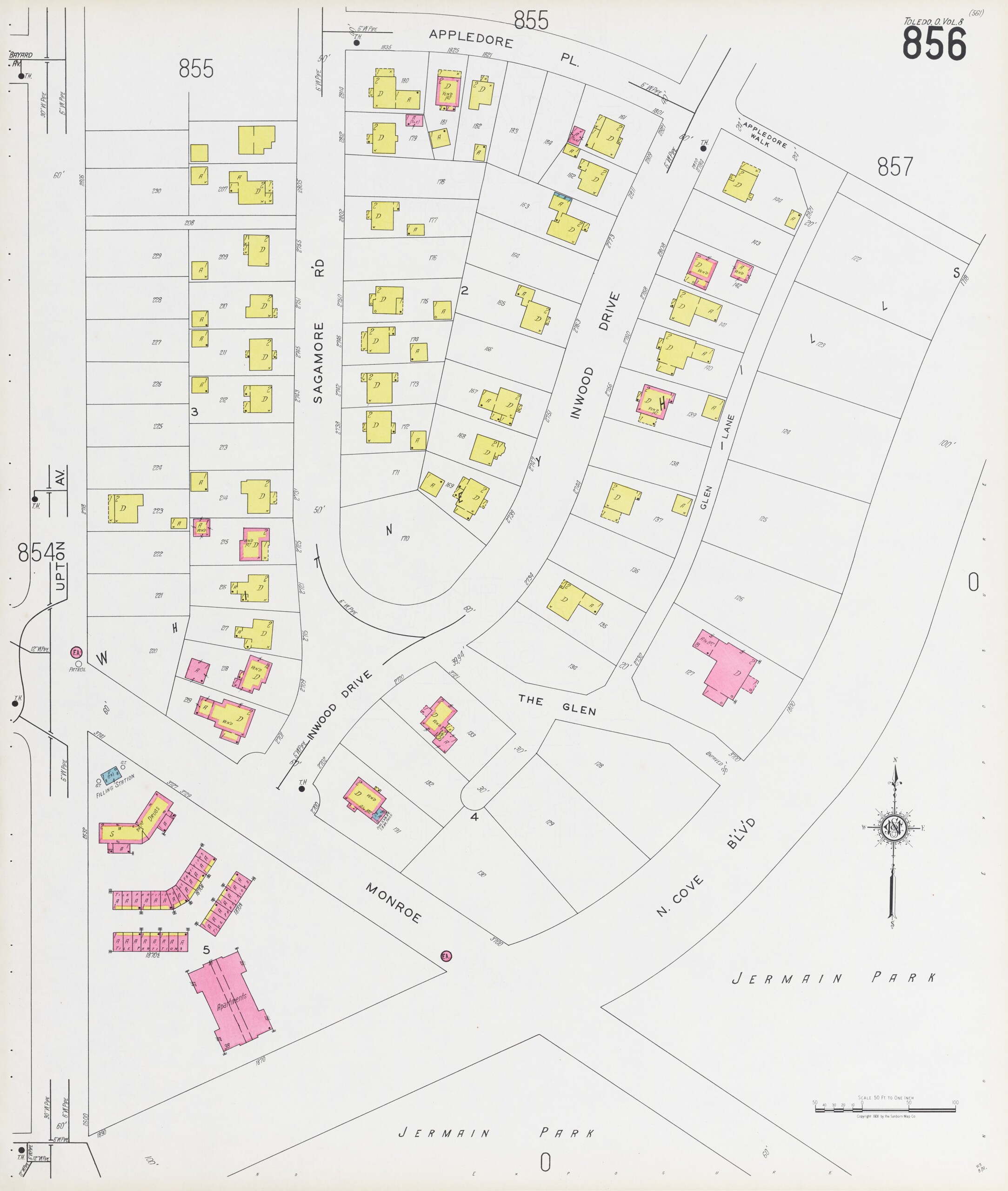
The Sanborn Map of the neighborhood.
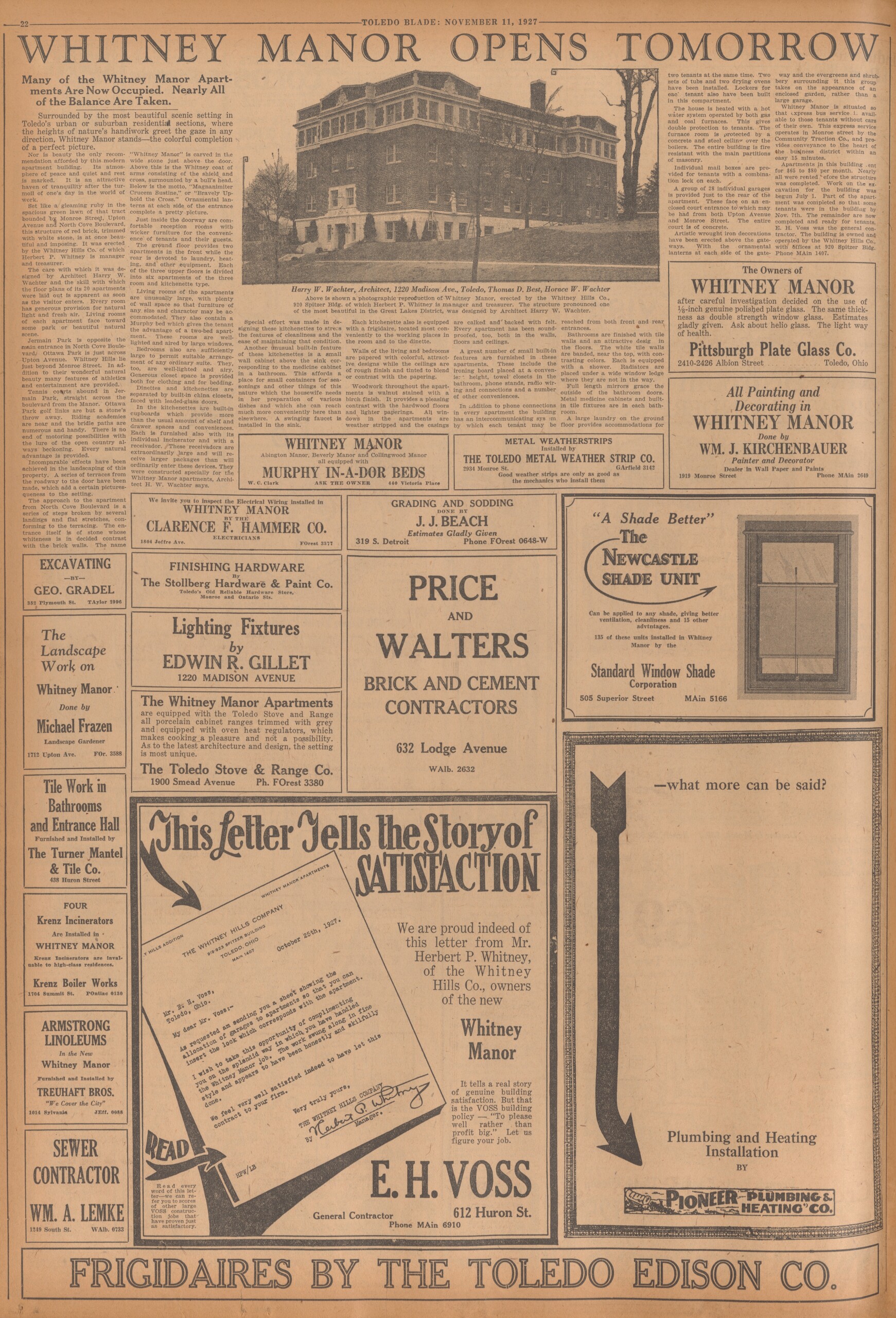
The full-page Toledo Blade feature celebrating the opening of the facility in 1927
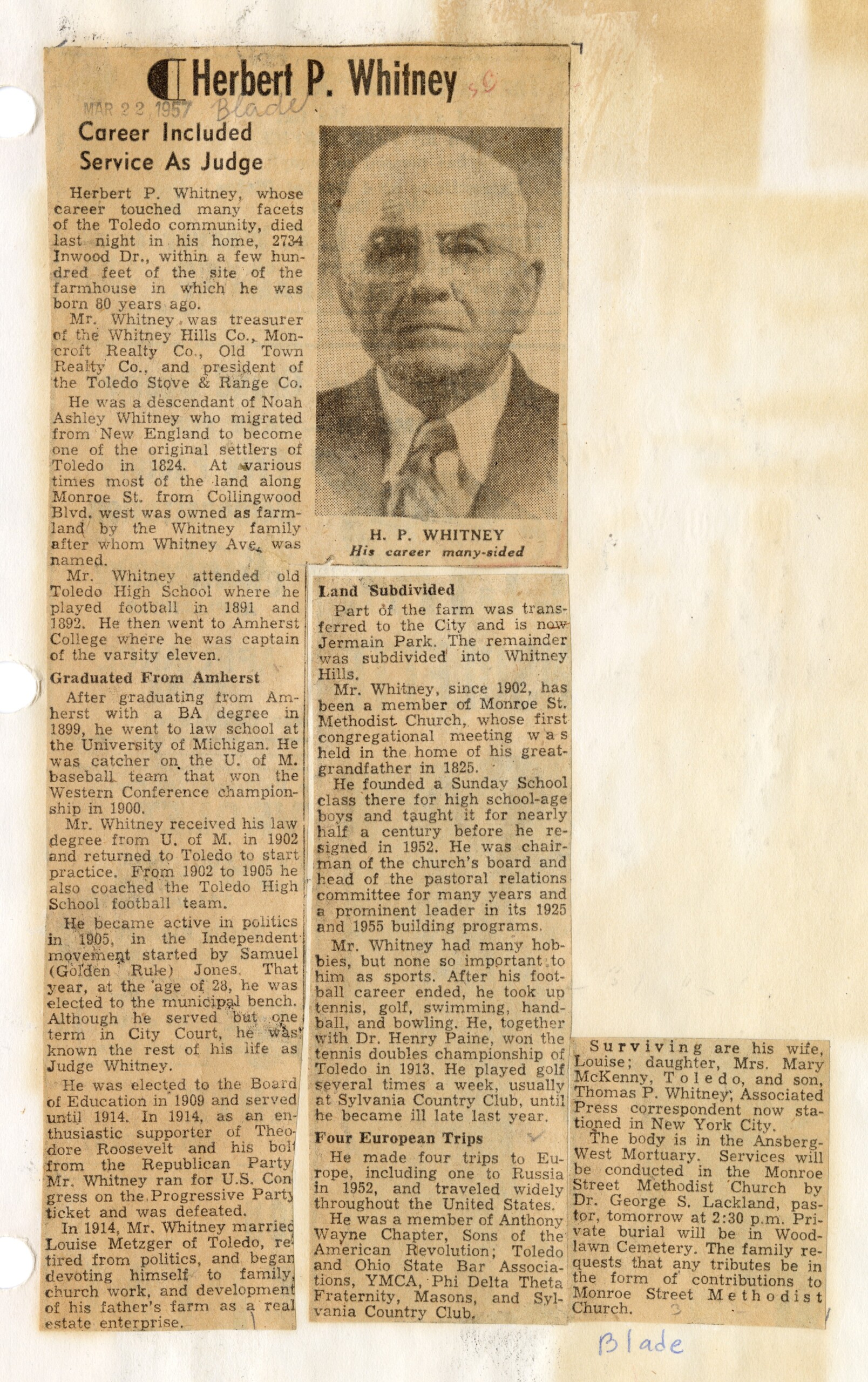
The obituary of Whitney Manor's developer
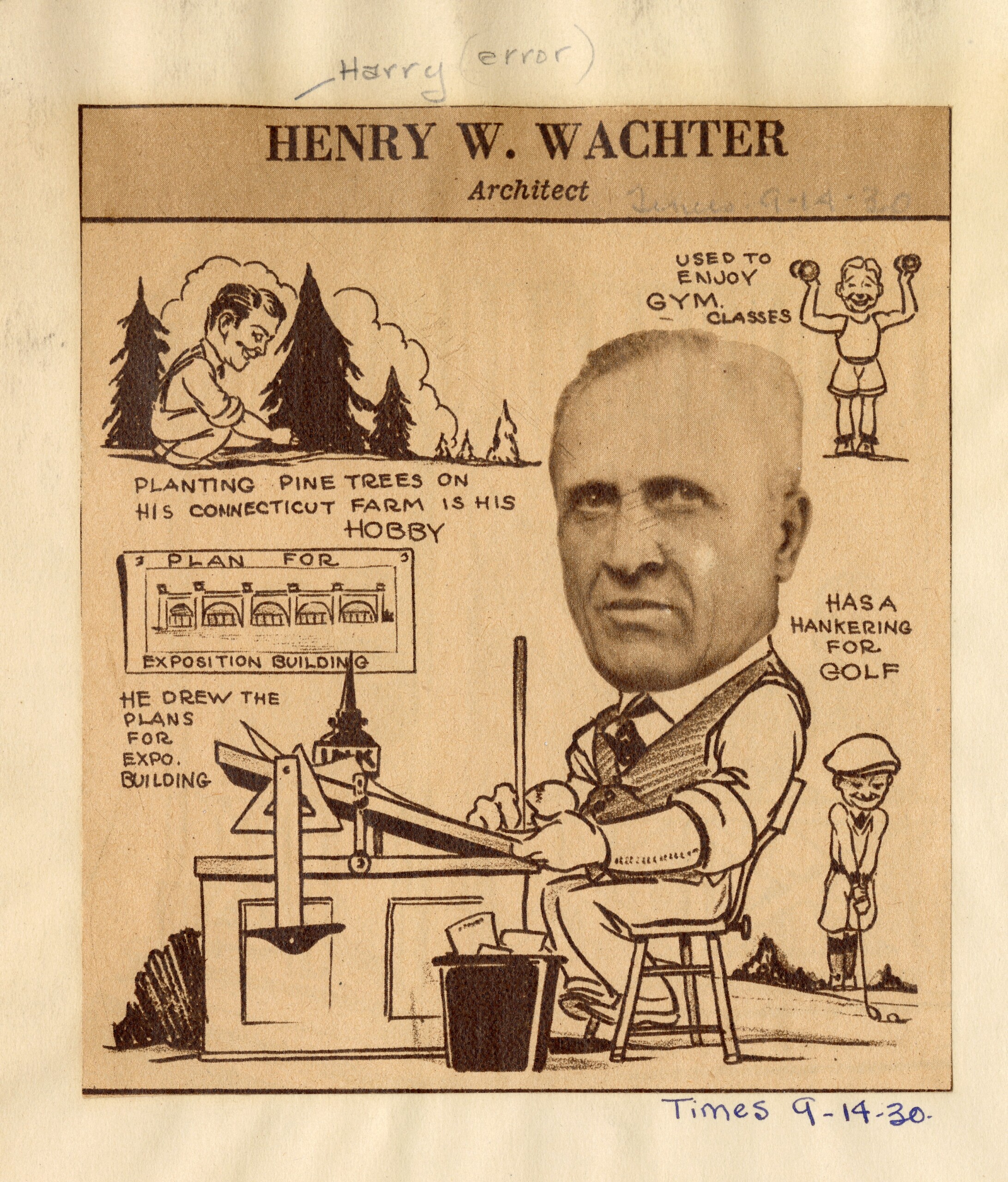
Harry Wilcox Wachter from the Biography Scrapbook Collection
Are you interested in doing some research of your own on a Toledo or Lucas County home or building? Please feel free to use the resources mentioned in this blog and contact us for guidance at 419-259-5233 or local.history@toledolibrary.org.
Did you like this blog post? Keep up to date with all of our posts by subscribing to the Library’s newsletters!
Keep your reading list updated with our book lists. Our staff love to read and they’ll give you the scoop on new tv-series inspired titles, hobbies, educational resources, pop culture, current events, and more!
Looking for more great titles? Get personalized recommendations from our librarians with this simple form.